



Explore Our Frequently Asked Questions Page

  • All Topics
  • All Topics
  • Tooth Sensitivity
  • How Sensodyne Works
  • Sensodyne Ingredients
  • Sensodyne Products
  • Sensodyne and Whitening
  • Enamel Erosion

Tooth Sensitivity

How Sensodyne Works

  • How does Sensodyne toothpaste work?

    Sensodyne toothpastes work in 1 of 2 ways:

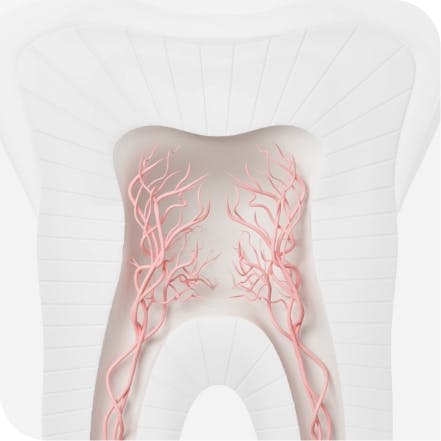
    1. Sensodyne toothpastes with potassium nitrate work to soothe the nerves inside your teeth from feeling pain from triggers.
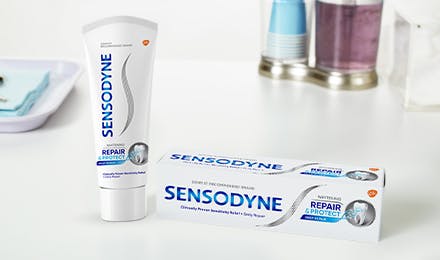
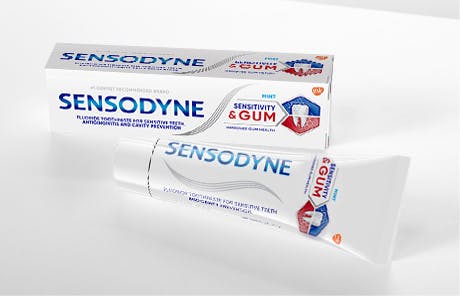
    2. Sensodyne toothpastes with stannous fluoride build a protective layer over the exposed dentin to create a barrier from painful triggers. Both formulations are proven to relieve and protect against tooth sensitivity pain when you brush twice a day, every day.

    To learn more about Sensodyne toothpastes, see our full range of products.

  • How long does Sensodyne toothpaste take to work?

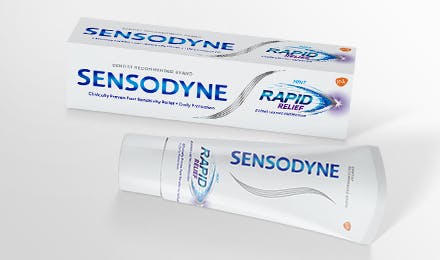
    Sensodyne Rapid Relief can relieve sensitivity* in as little as 3 days, while other Sensodyne toothpastes may take up to 2 weeks.*

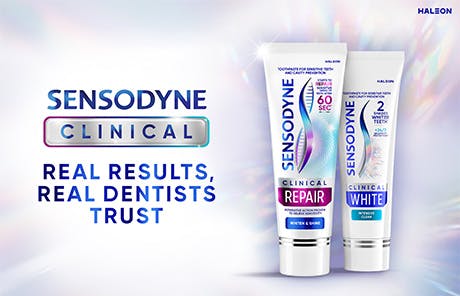
    What’s more, the formula in New Sensodyne Clinical Repair toothpastes activate as soon as you begin to brush your teeth and starts to repair sensitive areas of teeth after 60 seconds for substantial sensitivity relief in 3 days.

    If pain/sensitivity persists after four weeks of use, visit your dentist as your sensitive teeth may indicate a more serious problem. Use Sensodyne twice a day as your daily toothpaste to maintain sensitivity relief.

    *With continued twice daily brushing

  • How often should I use Sensodyne toothpaste?

    Use Sensodyne as your daily toothpaste, brushing twice a day, every day, for lasting tooth sensitivity relief. With Sensodyne, you can also get the benefits of fluoride, cavity protection, and fresh breath to help you maintain healthy and sensitivity-free teeth.

    Learn more about the ingredients in Sensodyne and how they work to reduce tooth sensitivity here.

  • Will my teeth become sensitive again if I stop using Sensodyne?

    If you stop brushing with Sensodyne toothpaste, your sensitivity can return, so it is best to make Sensodyne your daily toothpaste to get long-lasting relief. All Sensodyne toothpastes also provide the benefits of fluoride, cavity protection, fresh breath, and other benefits.

    Learn more about all the Sensodyne toothpastes here.

  • Does Sensodyne toothpaste help prevent cavities?

    Yes. All Sensodyne products contain fluoride, which helps to protect against cavities when you brush twice a day, every day.

  • Can I use Sensodyne toothpaste every day?

    Yes. Sensodyne is a daily toothpaste specially formulated to relieve and protect against tooth sensitivity* and is the #1 dentist recommended toothpaste brand for sensitive teeth. Use it every day to help relieve tooth sensitivity and to also keep it from returning.

    *With twice daily brushing

Sensodyne Ingredients

Sensodyne Products


Sensodyne and Whitening

*As shown in an 8-week study

**With twice daily brushing


Enamel Erosion

  • What is enamel erosion?

    Enamel erosion occurs when your tooth enamel, the outer, white protective layer of your teeth, wears away, which can cause you to experience tooth sensitivity. Enamel wear can happen as a result of teeth grinding, aggressive brushing, or an acidic diet. Once enamel wears away, it cannot grow back.

    Not sure if your teeth are at risk? Take our quick quiz to find out if you are showing signs of sensitivity or enamel erosion and if Sensodyne or Pronamel toothpaste is right for you.

    For more information on Pronamel, visit www.pronamel.us.

  • What causes enamel wear?

    Over time, acidic foods and drinks—such as fruit and fruit juices, coffee and tea, ketchup, or salad dressing—can wear away your tooth enamel. This is also known as acid erosion. Other causes of enamel wear include teeth grinding and aggressive brushing.

    To help protect your teeth against enamel erosion, talk to your dentist and use a fluoride toothpaste specially formulated to help strengthen tooth enamel, such as Pronamel.

    For more information on Pronamel, visit www.pronamel.us.

  • Can enamel erosion cause sensitive teeth?

    Yes. Enamel is the hard, protective surface of the tooth. Over time, if tooth enamel wears away, it exposes the soft, yellow inner layer known as dentin. This can cause tooth sensitivity as the protection the enamel provides to the tooth and the nerves inside is reduced. This is why, if you have enamel erosion, eating ice cream or sipping hot soup can be painful.

    For more information on enamel erosion, visit www.pronamel.us.

  • Should I use Sensodyne or Pronamel toothpaste?

    Sensodyne toothpastes help relieve tooth sensitivity and Pronamel toothpastes help strengthen and protect tooth enamel. Take our quick quiz to find out if Sensodyne or Pronamel is right for you.

    For more information on Pronamel, visit www.pronamel.us.

Source Citations:

  1. Sensitive Teeth - Heat and Cold Sensitivity. Mouth Healthy. https://www.mouthhealthy.org/all-topics-a-z/sensitive-teeth. Accessed 07/10/2025. 
  2. Epidemiology of dentin hypersensitivity. Clinical Oral Investigations. https://link.springer.com/article/10.1007/s00784-012-0889-8 
  3. Sensitive teeth. Oral Health Foundation. https://www.dentalhealth.org/sensitive-teeth.  Accessed 07/10/2025. 
  4. Sensitive Teeth: Why They Hurt and How to Stop the Pain. John Hopkins Medicine. https://www.hopkinsmedicine.org/health/conditions-and-diseases/sensitive-teeth. Accessed 07/10/2025. 
  5. Brushing Your Teeth. Mouth Healthy. https://www.mouthhealthy.org/all-topics-a-z/brushing-your-teeth. Accessed 07/10/2025. 
  6. Toothache. NHS Inform. https://www.nhsinform.scot/illnesses-and-conditions/mouth/toothache/. Accessed 07/10/2025. 
  7. Evaluation of the clinical efficacy of potassium nitrate desensitizing mouthwash and a toothpaste in the treatment of dentinal hypersensitivity. PMC. https://pmc.ncbi.nlm.nih.gov/articles/PMC3908806/. Accessed 07/10/2025. 
  8. Stannous Fluoride Effects on Enamel: A Systematic Review. MDPI. https://pmc.ncbi.nlm.nih.gov/articles/PMC3908806/. Accessed 07/10/2025. 
  9. Gingival recession: its causes and types, and the importance of orthodontic treatment. PMC. https://pmc.ncbi.nlm.nih.gov/articles/PMC4944726/. Accessed 07/10/2025. 
  10. Effects of Sodium Tripolyphosphate on in Vitro Stain Removal Efficacy. Abstract Archives. https://iadr.abstractarchives.com/abstract/16iags-2471266/effects-of-sodium-tripolyphosphate-on-in-vitro-stain-removal-efficacy. Accessed 07/10/2025. 
  11. Whitening. American Dental Association. ADA. https://www.ada.org/resources/ada-library/oral-health-topics/whitening. Accessed 07/10/2025. 
  12. The Sensory Overload of Child-Rearing. Lurie Children's. https://www.luriechildrens.org/en/voices-of-child-health-in-chicago/the-sensory-overload-of-child-rearing/. Accessed 07/10/2025. 
  13. Dental erosion. Health Direct. https://www.healthdirect.gov.au/dental-erosion. Accessed 07/10/2025. 
  14. Prevalence of dentine hypersensitivity, erosive tooth wear, gingival recession and periodontal health in seven European countries. National Library of Medicine. https://pubmed.ncbi.nlm.nih.gov/39317300/. Accessed 9/16/2025.