



Why Do My Teeth When It’s Cold Outside? Understanding Tooth Sensitivity in Cold Weather

Cold weather can sometimes cause a sharp, sudden pain in your teeth. If you’ve ever wondered, “Why do my teeth hurt when the cold air hits them?” you aren’t alone. The dental pain triggered by extreme temperatures can have several causes such, as tooth decay, exposed dentin, upset tooth nerves due to grinding teeth, or a worn-out dental filling.1 Learn more about tooth sensitivity and how cold weather can contribute to the pain.
Key Takeaways
- Cold weather can trigger tooth sensitivity by exposing weakened enamel or dentin to sudden temperature changes, which directly stimulate nerves in the teeth.2,3,9
- Common causes of tooth pain or sensitivity include enamel erosion, cracked teeth, gum disease, worn fillings and sinus-related pressure during winter illnesses.2,8
- Prevention and relief include brushing twice daily with a soft-bristled toothbrush, limiting sugary or acidic drinks, and using a desensitizing toothpaste like Sensodyne Rapid Relief.2,3,9 Ask your dentist if sensitivity pain persists after 4 weeks of use.
What Is Tooth Sensitivity and What Causes It?
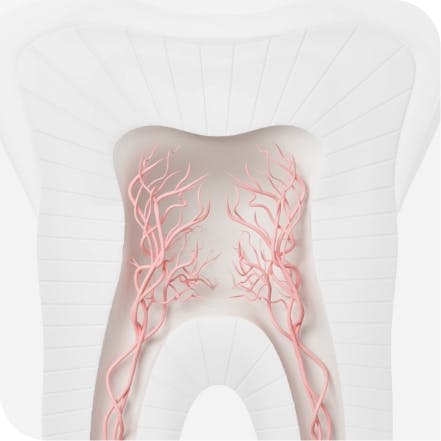
Tooth sensitivity occurs when enamel, or the protective layer around your teeth begins to wear away.1 Enamel covers dentin, which contains tubules that connect to the nerves and cells inside the tooth.1 When dentin is exposed, the tubules allow hot or cold to reach the nerves in the tooth.1
Other causes of tooth sensitivity may include:2
- Gum disease
- Cracked and fractured teeth
- Tooth grinding or clenching
- Worn fillings
- Tooth whitening
- Brushing too hard.
How Cold Weather Affects Sensitive Teeth?
If you’ve ever felt discomfort or pain after biting into something cold , it’s likely caused by temperature-related tooth sensitivity. Exposure to cold air can also cause you to feel sensitivity in your teeth.3
A comparative study was conducted to see how quickly temperature changes reach different layers of a tooth. Six different temperature sources were used, ranging from -70 °C to 140 °C (equivalent to -94 °F to 284 °F). Researchers concluded that introducing a stimulus that was a large temperature difference from the tooth’s normal temperature resulted in a larger, faster effect inside the tooth.4
For people with sensitive teeth, a large difference in temperature (like leaving a warm house and heading into subzero temperatures) may feel more extreme, since the cold air is able to trigger the nerves in the teeth more rapidly.1
Cracked Teeth Sensitivity
The American Association of Endodontists have defined five common classifications of cracked teeth; while craze lines are largely asymptomatic, a fractured cusp may lead to pain while biting and in the cold.5
Symptoms of a cracked tooth may include:5
- Spontaneous pain
- Pain while biting
- Cold irritation pain
Cracked teeth can be caused by consistently consuming foods and drinks at drastically different temperatures in quick succession.5 Some cracks, like craze lines, are not as severe or visible as others, but they are indicative of structural damage to the tooth’s enamel and may lead to tooth sensitivity.5
If you suspect that you have a cracked tooth, talk to a dental professional as soon as possible.
Respiratory Illnesses and Tooth Pain
Winter is also the time when respiratory illnesses like the common cold are most prevalent.6 A common cold can turn into a bacterial infection, triggering inflammation around the sinus cavity and leading to sinusitis.7
Tooth pain can be a common symptom of sinusitis because the roots of the upper molars are close to the sinus cavities located behind the cheekbone.8 When the sinuses become inflamed, as in sinusitis, the pressure on these nerves can lead to pain and sensitivity.8 If you suspect you have a respiratory illness, speak to a healthcare professional.
How to Help Prevent Tooth Sensitivity Caused by Cold Weather
Thankfully, there are ways to avoid tooth sensitivity when the weather drops. Take steps to help protect your teeth and reduce sensitivity:8
- Brushing twice a day, for two minutes each time with a soft-bristled toothbrush.
- Replace your toothbrush every 3-4 months, or when the bristles look worn.
- Clean between your teeth once a day to remove plaque and food from between the teeth and under the gums.
Although cold weather calls for warm drinks like hot cocoa, it’s important to keep the sugary drinks to a minimum when dealing with tooth sensitivity. Try to have sugary foods or acidic drinks less often or reserve them for mealtimes.3
Using Desensitizing Toothpaste to Help Tooth Sensitivity to Cold Weather
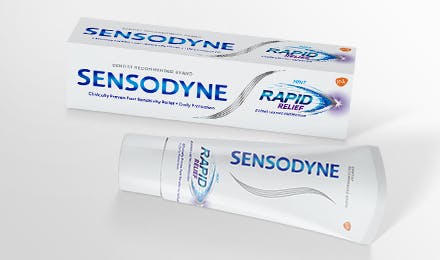
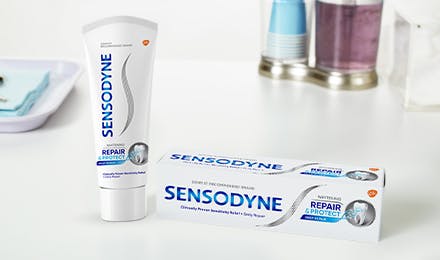
A simple way to get relief is to brush twice daily with a toothpaste specialized for sensitive teeth, such as Sensodyne Rapid Relief toothpaste, which can help relieve tooth sensitivity in just three days.* Thanks to its unique formulation with stannous fluoride, Sensodyne works to create a protective shield over your teeth’s most sensitive areas, providing sensitivity protection with twice daily brushing. Use the Sensodyne product finder to get the toothpaste that fits all your oral health and sensitivity needs.
The next time you’re getting ready to face the cold temperatures, be sure you have your jacket, boots, and Sensodyne, all on hand! Find more helpful tips on dealing with tooth sensitivity from the experts at Sensodyne.
*with twice daily brushing
Frequently Asked Questions
1. Why do my teeth hurt when I breathe in cold air?
Cold air can rapidly cool the surface of your teeth, triggering nerves if the enamel is worn or dentin is exposed. This can cause sharp, temporary pain known as dentin hypersensitivity.1,4
2. Can cracked teeth make sensitivity worse?
Yes. Cracks in tooth enamel allow temperature changes to reach the inner layers of the tooth more quickly, making pain from cold or food more intense.4,5
3. How can I prevent tooth sensitivity during cold weather?
Brush your teeth twice a day for two minutes each time with a soft-bristled toothbrush, floss daily, avoid excessive sugary or acidic drinks and consider using a desensitizing toothpaste to protect sensitive areas.3,9
Source Citations:
- Sensitive Teeth. American Dental Association. https://www.mouthhealthy.org/en/all-topics-a-z/sensitive-teeth Accessed 5/31/2023.
- Preventing and treating tooth sensitivity. Journal of the American Dental Association. https://jada.ada.org/article/S0002-8177(14)60601-2/fulltext. Accessed 8/12/2025
- Sensitive teeth. Oral Health Foundation. https://www.dentalhealth.org/sensitive-teeth Accessed 5/31/2023.
- Thermal transfer in extracted incisors during thermal pulp sensitivity testing. National Library of Medicine. https://pubmed.ncbi.nlm.nih.gov/18081809/. Accessed 8/13/2025.
- Review of Cracked Tooth Syndrome: Etiology, Diagnosis, Management, and Prevention. National Library of Medicine. https://pmc.ncbi.nlm.nih.gov/articles/PMC8694987/. Accessed 8/13/2025.
- Common Cold. MedlinePlus. https://medlineplus.gov/commoncold.html Accessed 5/31/2023.
- Sinusitis. MedlinePlus. https://medlineplus.gov/ency/article/000647.htm Accessed 5/31/2023.
- How to tell if tooth pain is caused by a sinus infection. University of Cincinnati. https://www.uc.edu/news/articles/2024/11/how-to-tell-if-tooth-pain-is-caused-by-sinus-infection.html. Accessed 8/13/2025.
- Brushing Your Teeth. Mouth Healthy. https://www.mouthhealthy.org/all-topics-a-z/brushing-your-teeth. Accessed 8/13/2025.